Saturday, October 16, 2021

Jandek - When I Took That Train - Review

https://corwoodindustries.com/product/0778/

I find When I Took That Train to be one of the most interesting Jandek albums in a while. The musical style is essentially the exact same as the previous few albums from Jandek, so I don’t really need to discuss it at all (assuming you've read my previous Jandek reviews). The lyrics and vocal delivery are what make it interesting, and also disturbing. 

First of all, I found the lyrics very easy to follow even while I was focusing on drawing, which was honestly a first for Jandek considering how poetically dense his lyricism usually is. The album revolves around one concept that is similar to a lot of the ideas about love/romance and infatuation that The End of It All and The Door Behind focus on, but it amplifies them to an extreme, ironic level. The lyrics revolve around the singer’s unhealthy obsession with his object of love, or maybe I should say object of “like”. Continuing the theme from The Door Behind, the singer is obsessed with being “liked” by this woman and keeps repeating some variation of “I like you” or “and then you’ll like me”. There are also a lot of references to physical and sexual attraction between them, which can get quite uncomfortable, and at some points it sounds like Jandek is straight up flirting with the audience. 

The vocal delivery is more spoken than sung. It reminds me a bit of old school blues. He even puts on a “flirty” tone to add to the lyrics, which gets uncomfortable, but adds to the whole ironic concept. The last few songs diverge from the theme of the rest of the album and change the tone, but still have some connections with the rest of it. The theme of the album reminds me of the super long songs from the spoken word era because they push an ironic, exaggerated concept for so long, that you’re not even sure if it’s ironic anymore. Yeah, late era Jandek isn’t exactly the artist you’re most willing to hear with this type of attitude. But I will say that this is one of the most fascinating and shocking and even disturbing Jandek albums I have heard in a while. 

I have already summarized the majority of the lyrical content, so I will just go on with a few highlights. “Wouldn’t You Agree” has a memorable moment where he sings “because it’s all about” and you expect the next word to be “you”, but it’s actually “God”, which I think is intended to be ironic because of how the singer worships his woman in all the other songs. The song also mentions what sounds like some pretty unhealthy relationship aspects. Jandek insists that he is a rock that will not change, but immediately after, he talks about how he will change for her, and how they both have to change to meet each other’s standards.

“Angel Moves” has another one of these shocking moments, starting with the lyric “I think the goal of life is / Make a man feel like a god”. He describes someone getting into an accident on the road, and their angel saving them. There is one part with a very intense, memorable vocal howl. 

On “Thing Called Me” the singer talks about his life in “the corner of your existence” for “six million years”. The only thing I can think is that it feels like an unfiltered declaration of self. 

The final song “My Escape” is a journey of a song. It starts with the singer being trapped by a spider, and begging to be set free to get back to his house, but all he needs is the door. He also speaks of the addressee dying for him. The song ends on a very depressing note that sounds like he regrets what he said on all the previous songs.

“I don’t know what I’m becoming 

I can’t see past my eyes, it seems 

But I’ll take the green blood 

Turn it red inside of me 

I’ll take your hand inside my body 

Reach in your heart 

Take it out for food 

Eat my heart out 

Take the rest of me inside of you”

I can understand why someone would think this album is annoying, but I do think a lot of the lyricism is worthwhile despite being a little repetitive or uncomfortable. It certainly shows that Jandek has always been a very unique artist who hasn’t run out of ideas. 

7/10

Essential album?: Yes

Essential songs: 

Angel Moves

Jandek - A Kingdom He Likes - Review

https://corwoodindustries.com/product/0777/

A Kingdom He Likes is Jandek’s lowest rated album on rateyourmusic.com right now, which is honestly quite an achievement considering the amount of albums he has. However, I didn’t think it was that bad at all, and I don’t think that’s just me having sympathy for this under-appreciated album (as I tend to do with a lot of other artists). It’s a similar type of album to I Threw You Away and The Humility of Pain with repetitive atonal acoustic strumming and howling vocals. I would say it’s not as good as those, but it had a few moments that shocked me or that I thought were pretty funny. 

The guitar technique had decent variation at times, but only ended up being slightly interesting. The lyrics remind me of the Staring at the Cellophane-Living in a Moon so Blue duo because of the random moments that stood out to me. The vocals are pretty decent. They’re very painful, although still nothing lives up to the voice from “Blues Turned Black” or the vocal style from the earlier Jandek albums. 

I don’t really follow “I Gave My Eternity”, but there’s a few lines I can pick out that I like. 

“I gave my eternity

Gave it away

And you can find it under your sway

Whoever calls it night is not serious enough

At night I’ve gone back to where I came from

I see my journey in a thousand ways

Take off your mask now

Reveal yourself

Come out and show me

You beautiful thing

I’ll just be me here in the space around me”

“Real Afternoons” starts with an ironic description of the refrigerator as an altar. The moment he sings “Straight and erect” has me thinking he’s listening to “Vertebrae by Vertebrae” by Bjork, but, well, this album came 3 years before Volta. “Skank, you skank” was one of the funny moments of the album and completely changes the subject of the song to telling someone to bug off.

“A Windy Time” feels like a random little ditty about a business meeting, of all things. I like the lyric “I don’t need a smoke alarm to tell me there’s a fire / And I still have the sense of smell and heat and cold”.

“Your Own Little World” was another one of the moments that stood out to me on my first listen. It describes a grotesque situation where Jandek’s house is infested with spiders and different types of mold, and how the spiders are so powerful that they practically own the house now and Jandek just submits to them. Gross, but symbolic.

“Sticks in the Marsh” is about the singer sleeping overnight in an old abandoned house and having a Thoreau moment, rejecting society to instead travel among nature. He seeks guidance from the “man sun God”, and then ends the song with a bold statement: “There is no God, God is everything / It’s all a picture we’re painting on the street”.

“No One Knows Your Name” starts with a personal commitment to getting some bad thing out of himself that’s causing him pain. The middle of the song quickly changes the subject and maybe somewhat connects to the topic but mostly looks like random imagery. I like the last line “I got my demons strangled by the throat”. Weird song. 

“It Rang Eleven Times” starts with Jandek describing having programmed his own organs to have full control over them. Then it suddenly changes to daring someone to jump off a cliff without looking down and laughing all they want. But he sings “I’ll never go with you / I’m the one that’s there”. More confusion.

Well, the lyrics aren’t that great. There are some very wacky ideas and a few profound moments scattered throughout the album, and a lot of mishmash subject matters. There definitely isn’t an overarching theme like the last 2 albums, which focused on relationships. I still think this is better than the mediocre 90s acoustic albums such as Glad to Get Away and White Box Requiem, however, just because of the general musical style of this new era. 

6/10

Essential album?: No

Essential songs:

Your Own Little World


Friday, August 20, 2021

(this is embarrassing) the cult on nu campus... yeah

  My story started on an evening in April of 2021 when I was walking along the block outside my dorm to the dining hall for what seemed like the hundredth time. We were already a year into the COVID-19 pandemic lockdowns, but I was still required to take all my college classes online and physically distance myself from everyone every time I went outside. I was only a shy freshman who had an extremely difficult time socializing with people through Zoom meetings, and could not bring myself to talk to anyone in my dorm, so, needless to say, I did not have any friends. I was in a couple of extracurricular activities, like being on the parliamentary debate team, and writing for a school newspaper, but those activities were stressing me out and I would skip club meetings a lot. I had no place where I felt that I belonged on that campus, but I also knew that I probably wasn’t the only one who felt that badly. 

I had walked only a minute away from my dorm when I saw a small, diverse group of about 7 young people crossing the street towards me. The girl in front, a short and fair girl with heavy makeup and a high ponytail, noticed me and said “Hey, I really like your outfit!”

I looked down at the oversized green sweatshirt and jeans that I was wearing. “Thanks,” I said.

The girl stopped me and continued to talk. “Hey, do you have any plans for this evening? And do you go to church and study the Bible? Because we’re about to go to our Bible night and it would be really cool if you could come with us.”

Being a schedule freak, I did not want to say yes to such a spontaneous plan. I had already made a reservation to show up at the dining hall in 5 minutes and I also needed to eat at some point that night. But I was actually a God-believing Protestant Christian who had not gone to church in a while since I left home, and had not yet bothered to join any religious groups on campus.

“Yeah, I actually do go to a Protestant church. I don’t think I can come to the meeting right now,” I told her, “but I can maybe come to the next one.”

“Oh, that’s fine,” she said. “Maybe you can give me your number and I can text you about having a Bible study with you.”

“Okay, sure,” I said, and she handed me her phone. 

“I’m Hannah, and this is Patricia,” she said, gesturing to her short, smiling Asian friend, as I typed my name and number into Hannah’s contacts. 

“I’m Lyla,” I told her.

“That’s a pretty name.” I tried my best to give a nice look towards her through my opaque face mask. She laughed and asked, “Do you play guitar?”

“Yeah! I actually do,” I said.

“I can tell because of your nails.” I looked at Hannah’s hands and she had similarly cut nails to mine. Long on the right hand for fingerpicking and short on the left for fretting. 

I gave her back her phone. “Okay, I have to go, but, um, I guess I’ll talk to you later,” I said, continuing my walk. I ruminated over the interaction as I made my way to the dining hall. I later texted my group chat about the funny occurrence of someone noticing that I play guitar through the length of my nails. No one else had noticed that before. 

Tuesday, August 3, 2021

Some 90s Jandek Album Reviews

 Hey, I just remembered I had this blog and I never finished posting the Jandek album reviews that I wrote, like, years ago. Here are some more. They are not that great but I don't have much time to refine them, especially since it will probably be a long time until I get back around to listening to these albums again. 

Jandek - Twelfth Apostle

A very creepy and simply bone chilling album. I believe all the albums from this point on are merely solo guitar and vocals, so I'm going to miss the band, but there’s still some interesting aspects here. I just found everything about it very haunting and reminiscent of mental illness. There’s also less of a childlike innocence that permeated the early acoustic records; this era is perhaps more mature. The guitar technique has only improved slightly. The only new aspect this album introduces is a heavy use of an echo effect on some tracks in the second half, particularly on “Could Be Anyone”, the most haunting track. “Whiskers” is similar, which is a more spiteful and disturbing track. 

The lyrics are really good; there are some great lines, but they seem to be a lot more abstract with a lot of random references to objects and characters that come and go without any solid circumstances. While there is interesting imagery and a few particularly strange or funny moments, I couldn’t personally relate to any of the lyrics. I think it’s better than the earliest Jandek solo acoustic records, but not enough to warrant a good score. 

6/10

Essential album?: No

Essential songs:

Could Be Anyone

Whiskers

Jandek - Graven Image

I'm happy with how this one turned out. I expected it to be the same type of album as Twelfth Apostle, but it’s quite different and a little bit more exciting. It actually starts out with the same kind of haunting music as the previous album, and I like “Ghost Town by the Sea”. “A Real Number” manages to finally introduce a new instrument we have not heard with Jandek, which is the accordion. Surprisingly, the accordion sounds nothing like Jandek’s harmonica or guitar playing. The song is really melodic, and was quite pleasant, except for a slightly dissonant ending. 

The rest of the album is a little bit more intense and humorous. “Janky” is a short, funny song with Jandek going ham on the harmonica and seemingly singing about himself. Starting with “Phillip Was Mentioned”, a dense and intense song with more accordion, the songs are noticeably more lo-fi. The guitar technique also starts to resemble traditional blues a bit more, despite still being very strange. 

The lyrics seem to mostly make a little bit more sense on this album. “Nothing You Lack” is definitely nonsense, but the rest of the songs have very beautiful stories with great lines. I see a theme of the protagonist being perceived as a ghost by those around him. Not a “great” album by any means but one of the more solid “solo” albums.

7/10

Essential album?: No
Essential songs:
A Real Number
Janky
Phillip Was Mentioned

Jandek - Glad to Get Away

 I don’t know… Glad to Get Away is just boring, boring, boring. It’s similar to Twelfth Apostle, but not even as interesting. All the songs sound the same, and there’s not even anything going on with the strumming. A lot of the songs have single-string-picked notes that sound really lazy. The only really worthwhile song here is “Van Ness Mission”, which is more intense, uses a lot of reverb, and is very haunting. 

The following song, “Anticipation”, is similar, but sparser and quieter. I also think these tracks have the most interesting lyrics on the album, with the latter having Jandek describing the “black girl” or “dark woman” that he loves, and the song ends with “She had a look on her face / When I gave her a golden ring”. I have to wonder if the story is about his real life. I don’t really connect with the lyrics of the rest of the songs, except for a few slightly deep or funny lines. There are the common lyrical themes of depression and loneliness, but I feel like other Jandek albums portray that more vividly. “Nancy Knows” has an interesting title, but is a lazy instrumental with string plucking again. “Plenty” introduces a harmonica, but is unmemorable. Overall, this was a sub-par Jandek album with one or two interesting moments. 

5/10

Essential album?: No
Essential songs:
Van Ness Mission


Tuesday, April 13, 2021

The History of Polish Avant-Garde Jazz of the 1950s and 1960s: Part 3 - Komeda, Trzaskowski, and Aftermath

Part 1

Part 2

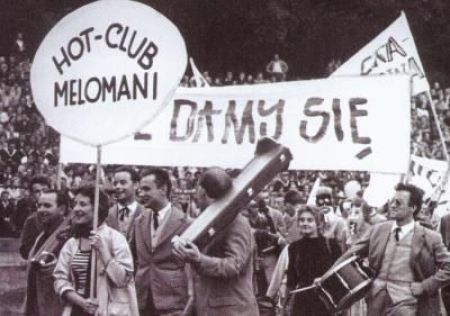
Many critics describe pianist and composer Krzysztof Komeda as the most important, popular, and influential Polish avant-garde jazz musician in history. Komeda was born in 1931, and started learning piano at a very young age during what was considered the romantic, or “catacomb” period of Polish jazz. Komeda was not his real surname, as he used the name as a pseudonym to separate his artistic life from his day job at a clinic. He began to participate in many be-bop and dixieland jazz jam sessions with other notable jazz musicians, such as Jerzy Grzewinski and 'Ptaszyn' Wroblewski. Eventually, Komeda helped form the Melomani jazz collective in 1947. This was a very influential group because they helped jazz thrive in the underground during its period of being banned under Stalin’s rule. After the ban was lifted, they also played popular jazz covers on the radio. The group made a notable performance at the Sopot Jazz Festival, one of the first landmark events in the history of Polish jazz after its initial ban (Radlinski). 

Komeda’s jazz band usually performed as a quintet or sextet. The Komeda Sextet became the first Polish group to exclusively play a modern form of jazz that was almost completely separated from the traditional dixieland style. In 1966, the Komeda Quintet released their only proper studio album, Astigmatic. The album was marked by its intensely technical and avant-garde song styles. The album pioneered a markedly European aesthetic for jazz that did not merely copy American artists. Astigmatic was considered a significant milestone for Polish jazz, and is considered by many to be the greatest in its genre. It consists of 3 long tracks, “Astigmatic”, “Kattorna”, and “Svantetic”. The sound of the album is dominated by its rapid improvisational melodies. The instrumentalists use their own styles and imaginations as they continue to play new melodies and scales, each of them adding their own personal flair to the recording. However, Komeda’s formal compositional elements can also be inferred while listening to the album; the instrumentalists know when to play together softly, or when to start building up the intensity. Komeda also gives each member of the quintet a chance to perform their own solos. Aside from improvisations, there are also moments of carefully planned harmony between band members. An example is a passionate saxophone solo that makes up the middle section of the title track “Astigmatic”. This section is followed by a sparse, tense, emotionally ambiguous double bass solo. A rhythmic drum solo follows, and then the whole band comes back together to end the song. While one album may seem like not enough for Komeda to be such an influential musician, he was also recognized for his live performances, collaborations, and prolific amounts of Polish film scores (Radlinski). 

The second most influential Polish avant-garde jazz pianist and composer was Andrzej Trzaskowski. He began his career in 1951 by joining the Melomani collective with Krzysztof Komeda. Later in the decade, he also helped form the jazz groups Jazz Believers and The Wreckers. Trzaskowski and his band also performed live in America and East and West Germany. Through these travels, he became inspired by the musical styles of other cultures, and decided to combine elements of their music with the evolving scene of Polish jazz. Trzaskowski’s music was best known for its fusion of Polish jazz and western classical music. This type of avant-garde jazz came to be known as third stream. His music blended serious, traditional styles with contemporary techniques of composition. His compositions also became more avant-garde as time went on (Slawinski, Culture.pl).

The most popular album by the Andrzej Trzaskowski Quintet was their self-titled album. It was also known as Polish Jazz Volume 4. Polish Jazz was a prestigious label that ran from 1965 to 1989, which also published Komeda’s Astigmatic. The Andrzej Trzaskowski Quintet features piano, double bass, trumpet, saxophone, and drums. The album often builds up an atmosphere of suspense, which transitions into loud and chaotic instrumental solos. The eclectic album also has quite a bit of variety in song structures and emotional content. The opening song, “Requiem dla Scotta La Faro”, starts with a mysterious, occasionally dissonant piano. The piano chords are sparse, and the bouts of playing have long silences between them. Each time the piano comes back, the music builds in intensity until all the band members are playing together loudly; this is followed by a collapse back down into the pattern of quiet, sparse, dark piano. The following 18-minute abstract track “Synopsis” uses similar elements of suspense and chaos, with more lengthy and melodic instrumental solos on the double bass and horn instruments. In contrast, the songs “Ballada z silverowską kadencją” and “Post Scriptum” are shorter and subtler, laid-back and relaxed piano-based melodies (Slawinski). 

Komeda’s compositions and Trzaskowski’s recordings represent how two different approaches to the jazz genre both represented the same anti-Soviet ideal. Komeda’s pioneering of a distinctively Polish aesthetic for jazz helped rebel against the oppressive Soviet communist culture that was being pushed by the government. Other musicians who incorporated elements of Polish folk into their jazz compositions helped create a sense of national pride to help people stand together during the revolutions of the Cold War. Trzaskowski’s approach was to blend classical western elements into his jazz compositions, which served nearly the same purpose. The third stream subculture of Polish jazz was one of many examples of the diffusion of Western culture to the East, which stood against a government trying to paint the West as a capitalist enemy. 

After the 1960s, jazz continued to thrive, become more avant-garde, and play a strong role in the anti-communist counterculture of Poland. Jazz clubs and concerts could be a gathering place for artists and fans who were opposed to the actions of the state. The combination of multiple grassroots anti-state cultural phenomena, such as that of jazz, ultimately led to the fall of communism in Poland in 1989. Jazz was not the main cause of the fall, but it was certainly a major catalyst. However, with the fall of communism and the rise of capitalism, jazz was losing steam; its avant-garde nature had no commercial value, and Polish audiences were mostly interested in Western-style pop. Despite this, some obscure but passionate experimental subcultures still formed. A new Polish avant-garde jazz movement known as yass arose in the 1990s; this movement was even more eclectic than the initial wave of jazz. Yass included influences of Polish punk and folk, and could be more eccentric and experimental. Even though Polish avant-garde jazz today is an esoteric underground subculture, the influence of the early works in the genre are deeply appreciated; the love for the works of Komeda and Trzaskowski continue to this day. 

Works Cited

Culture.pl. Polish Jazz - Freedom at Last. Culture.pl, Adam Mickiewicz Institute, 19 January 2009, https://culture.pl/en/article/polish-jazz-freedom-at-last Accessed 21 February 2021. 

InterContinental. Forbidden Bebop: How Eastern European Jazz Keeps Breaking All the Rules. InterContinental, IHG, n.d., https://life.intercontinental.com/sg/empathy-sg/forbidden-bebop-how-eastern-european-jazz-keeps-breaking-all-the-rules/ Accessed 21 February 2021. 

Jakelski, Lisa. Gorecki’s Scontri and Avant-Garde Music in Cold War Poland. The Journal of Musicology, Vol. 26, No. 2, University of California Press, Spring 2009, https://www.jstor.org/stable/10.1525/jm.2009.26.2.205?seq=1#metadata_info_tab_contents Accessed 21 February 2021. 

Radlinski, Jerzy. Christopher Komeda (1931-1969). Komeda.pl, n.d., https://www.komeda.pl/indexa.html Accessed 21 February 2021. 

Slawinski, Adam. The Andrzej Trzaskowski Quintet ‎– Polish Jazz Vol. 4. Polish Jazz, Polish Jazz Net, 2005, https://web.archive.org/web/20070824220846/http://www.polishjazz.com/pjs/4.htm Accessed 21 February 2021. 


The History of Polish Avant-Garde Jazz of the 1950s and 1960s: Part 2 - Development of the New Style

Part 1

Avant-garde jazz, while using the same types of instruments as previous forms of jazz, and some of the same playing techniques, took the genre in a completely different direction. Musicians in the genre would make the element of experimentation and unconventionality the foremost aspect of the music. The atmosphere of this music was often dark, chaotic, and perplexing. Some composers would use uncommon time signatures and craft extremely detailed and melodic compositions. A sub-genre of avant-garde jazz was free jazz, which eschewed all elements of traditional structure and rhythm completely, and consisted of an ensemble playing their instruments chaotically (Slawinski). 

One part of what made the Polish avant-garde jazz scene so unique was its combination of Eastern and Western musical elements (Jakelski, InterContinental). Composers borrowed elements of improvisation from Western artists, such as John Coltrane, but some others also incorporated the sensibility and instrumentation of local Polish folk into their jazz recordings. This was partly because American records were not very accessible to musicians, so they played by their instincts. However, the incorporation of traditional Polish elements into the music may have also represented a sense of national pride against a dominant Soviet government; Mycielski claimed that “composers should create characteristically Polish works whose emotional content would speak to society” (Jakelski). Even though avant-garde jazz was a largely instrumental genre, it still represented an anti-communist sentiment for many; the scene’s artists were not ashamed to spread music inspired by a capitalist Western culture. At the same time, the genre was also authentically Polish and free from Soviet propaganda. The genre’s playfulness and lack of boundaries also represented freedom, and set the scene for a counter-cultural rebellion to occur. 

Some attempts by critics to justify the Polish government’s support of the avant-garde scene try to use this fact to write Poland as an opposer of the Cold War. Western critics saw Polish avant-garde music as a strong symbol of resistance against communist rule. This contradicted a common stereotype that all music that came from communist countries was merely propaganda. Not all Eastern European countries had a government who supported the avant-garde scene as much as the Polish government did, which made the scene so unique (Jakelski). While many avant-garde jazz musicians certainly had an anti-communist sentiment, this was not the case with the Polish government themselves. Leaders such as Gomułka allowed jazz, but did not support its political rebellion. There was also a level of separation between avant-garde jazz musicians and the government, simply because the music was merely incomprehensible to the authorities. The music was mostly instrumental, and its cold, perplexing, and “crazy” image was enough for the government to simply leave them alone in a way (InterContinental). 

The History of Polish Avant-Garde Jazz of the 1950s and 1960s: Part 1 - Background

Polish avant-garde jazz was a distinctive scene that was inspired by, but did not merely copy its western influences. The music played a significant role in the cultural anti-communist counter-revolution during the Cold War in Poland.

The history of Polish jazz starts in the 1920s. Jazz music had first been invented by African-Americans in the United States in the early 20th century, and became one of the first forms of truly popular music; it was danceable, its aspect of improvisation could be wild and unpredictable, and the practice of recording albums and pressing records was becoming more commonplace. The genre culturally diffused to Poland after World War I and the Polish-Soviet War. These events asserted Polish power and independence, but deepened the tension between Poland and the Soviet Union. Meanwhile, Jazz continued to grow in popularity as an enjoyable medium in Poland for the next few decades (Culture.pl).

However, World War II was an extremely tumultuous time period for Polish culture, as Nazi Germany’s occupation of the country from 1939 to 1945 ended many Polish lives and ruined others. The end of the war only marked the beginning of another period of occupation. At the Yalta Conference, world leaders were negotiating the division of post-war European countries between the East and the West. American and British leaders surrendered Poland to the dominance of Soviet communist leader Joseph Stalin. The Soviet communist rule in Poland came along with strict bans on culture, to avoid spreading any images related to the capitalist West. Jazz music, having originated in the United States, was quickly banned because it was a symbol of the western enemy. The government did not allow artists to play jazz music on the radio or perform live music. Jazz continued to secretly grow underground, in private homes, and with the formation of the jazz ensemble Melomani in 1947 (Culture.pl).

Joseph Stalin died in 1953, which marked a significant shift for Polish culture. Legal restrictions on culture became more relaxed following this point, and jazz was able to grow significantly as a cultural force (Culture.pl). In 1956, the Sopot Jazz Festival marked the first emergence of jazz from an underground artistry to a major cultural scale, as well as the first legal acknowledgment of jazz. Other sources of spread were the magazine “Jazz” and official jazz clubs. More foreign jazz musicians were coming to Poland in the late 1950s and bringing their influences to the expanding genre. Jazz came to represent freedom, solidarity, and the joy of youth (Culture.pl).

However, even though jazz was allowed more by the government, there was still great political tension marking the genre. Protests against resource shortages and poor working conditions, starting in Poznan in the late 1950s, set the landscape for the content of music. Artists across all genres were increasingly making protests songs with anti-communist messages. Władysław Gomułka became the leader of Poland in 1956 as the head of the Communist party. Many of his actions appeased communists and did not wish to change the system. He instead opted for a “Polish road to socialism”. Gomułka still continued the pattern of more relaxed guidelines for cultural expression. As the conflicts between the citizens and the state grew, which continued to be reflected in popular music, jazz eventually evolved into 3 different styles: dixieland (traditional), straight-ahead (mainstream), and avant-garde (Culture.pl).