Friday, July 24, 2020

Jandek - Ready for the House - Review and Introduction to Jandek Series

In a period of a few months, the outsider artist Jandek has become one of my favorite artists ever. Something about his music is so lonely, unique, poetic, conceptual, and most of all, avant-garde. I felt like there was some bigger concept that each album added to every time I checked out a new Jandek album. Because of these connections between albums, I decided to start writing reviews of every Jandek album I listened to in order to gather my thoughts and rate/rank his albums according to my opinions.

I'm planning to listen to all of his albums by some point; he has 99 albums of original material at the time of writing. Several of his albums are live recordings, but surprisingly, all Jandek concerts consist of entirely new music and lyrics. Most of the reviews I've written are in a very casual, rough format, but I'm going to start a series on this blog where I'll clean up the reviews and finally post them for all to see. Instead of posting these reviews in the order of the album release dates, I'm going to post them in the order that I listened to them. I didn't listen to Jandek's discography in order, so there were certain things I put or didn't put in these reviews that makes them most sensible to put in this order. Sorry if this is confusing, but starting with Twelfth Apostle, I decided that I was going to challenge myself to listen to every single album, so at that point, the reviews will be in order.

Additionally, these reviews will serve as somewhat of a "guide to Jandek". I will not only talk about my opinions on the music, but also the content of the albums themselves as if the reader has not heard it, and my speculation on how they were made. For each album, I will indicate whether or not I think it is an essential album within his discography, and list the essential songs from that album. Songs with an asterisk are my absolute favorites.

Note that I have reviewed every album I've listened to already, but the reviews are in a very rough draft form. If you want to read my rough drafts, check them out here: https://docs.google.com/document/d/1QqVthWnb9BYrdcK4PVyDSJSMQaj9j8EPlkPImHgixhw/edit?usp=sharing 

Here is my review of Jandek's first album, Ready for the House (1978).
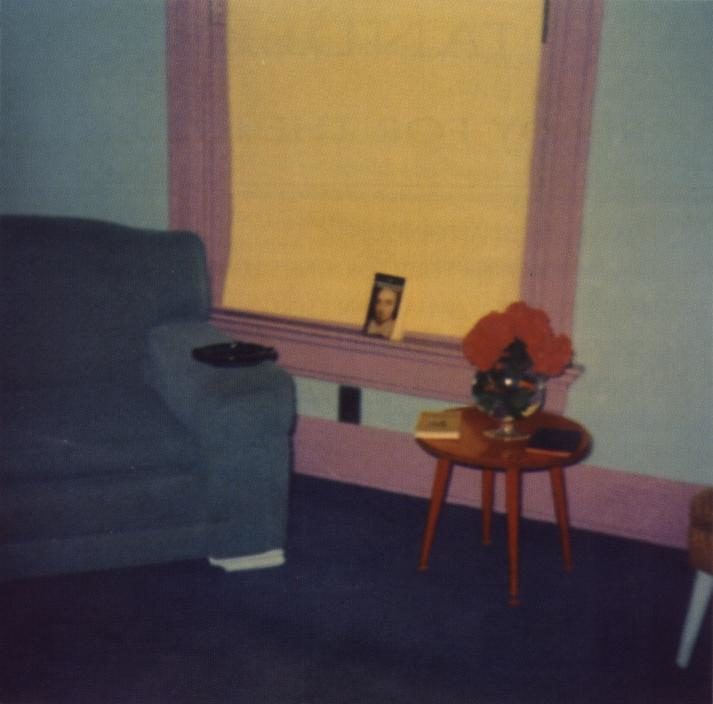


Ready for the House is where Jandek's story started. The entire album, except for the final track, is played on solo acoustic guitar plus vocals. You may recall something such as Pink Moon, but this is even more raw and primitive. The album cover is one of the most unique and haunting photos I’ve ever seen. The colors look very unnatural, and the lighting looks as if it was from a camera flashing in the pitch darkness. The empty chair beside a window with the shade pulled down, along with the other peculiar elements of the cover, hint that this is one of the most depressive folk albums ever created. Jandek’s guitar is tuned to a unique alternate tuning, and the album is played entirely on open strings, so every song is a variation of one chord. Jandek lore indicates that early albums sounded like this because of an old guitar where the strings were too far from the frets to play properly. The chord itself feels frankly bitter and dusty, unlike anything I've ever heard before, and the artist reportedly tuned his guitar until it sounded right to him.

The album is one of the most unique and memorable I’ve ever heard. The first listen is the most grueling to get through because of the repetitive guitar style, but it gets better on repeated listens because you get used to the Jandek style, and you begin to notice the melodies. The vocals are very anxious and whispery, or spiteful at times ("Cave in on You", "They Told Me I Was a Fool"), but always have a certain pain to them. Most of the time, they work well with the lyrics.

The lyrics are the best aspect of this album. They are devastatingly personal, lonely, and heartbreaking. They describe the blasé, astray feeling that emerges from isolating oneself and living with the pain of rejection from the world.

The final track is a big surprise - it’s on electric guitar, and in quasi-standard tuning. It’s actually quite pleasant and melodic, yet still primitive and anxious.

With every listen, I notice something different about this album and how the tracks distinguish themselves from one another. The sarcastic cries of “big time in the city” on "Naked in the Afternoon", the desperate rhythm and repetition of "What Can I Say, What Can I Sing", the broken wails at the slowed ending of "They Told Me About You", the intensity and yelping peaks of "Cave In On You", and the spiteful narrative mastery of "They Told Me I Was a Fool" are my favorite moments within the thick of this album. "European Jewel (Incomplete)" is a peek into the world outside, but it stops before it’s enough to fully taste.

While this album doesn’t have the most immediate replay value, it’s one of the rawest depictions of loneliness and pain you’ll get, and one of the most outsider albums there is. When I do get around to replaying it, and I recognize a lyric, it becomes more meaningful, and I connect more personally with the artist.

9/10

Essential album?: Yes

Essential songs:
Naked in the Afternoon*
Cave in on You
They Told Me I Was a Fool
European Jewel (Incomplete)*

Saturday, July 18, 2020

Susanna - Sonata Mix Dwarf Cosmos - Review


    The unfortunate circumstance of Susanna’s music is that her music will likely always be obscure. Her style is too esoteric to be listened to by anyone except the type of music critic who likes to listen to one album by an artist they don’t know and give it a numbered score after one listen. They’re probably going to rate it poorly, because they don’t know who Susanna is and they think this is boring, so why should they bother to give it praise, or a second listen and an in-depth analysis? However, I believe Susanna’s art goes deeper than the way that most people likely approach her music. Each part is more than an obscure album to rate; this album in particular is crucial to her unique, conceptual discography that holds a lot of personal value to me, and it requires more than one passive listen to fully understand. In fact, Susanna’s music was a gateway for me into both experimental and folk music throughout my teen years, which may seem hard to believe because of how unknown she is, but it’s a long story.

    Years after first hearing this album and exploring different folk music, I still don’t think I’ve heard anything as restrained, quiet, and sparse, and I love it for that. It’s unique within her discography in that, while Susanna’s music has always been minimalist and low-key, Sonata Mix Dwarf Cosmos is the peak of sparse, depressing, yet beautiful and simple songwriting. It’s her first “solo” album, the first one to feature entirely original songs, and the first to feature no electronic accompaniment, which already shows that this album is considered an important milestone for the singer, but represents an emotional nadir. 

    The album as a whole paints one picture, but after listening to it dozens of times, I see something different and special in each song, with every detail from Susanna’s vocal inflections to the instrumentation to the lyrics becoming more significantly meaningful to me. I can't give it anything less than a perfect score when I consider how much this album has meant to me all these years. This album is the feeling of stepping out onto a pristine layer of snow before sunrise while everyone is asleep. This album is also a moment of solitude within one’s room to reflect on a tumultuous experience. This album comforted me because it helped me know that someone else had the same need for a restrained quietness to understand the inner demons. 

    Susanna’s voice is clear and melodic, but sometimes rises just barely above a whisper on some of the saddest lyrics on the album. The instrumentation is subtle and very minimalist, but works effectively. Susanna plays the piano sparsely with long pauses, but not without purpose, and the melodies sometimes have a palpable darkness to them. Certain songs, such as “Demon Dance”, “We Offer”, and “Born in the Desert” shift toward darkness in their choruses and change the mood of the song. Guest musicians contribute to the atmosphere of the album without breaking it, such as the harpist on “Hangout”, the despairing, droning electric guitar on “Stay”, and the low, devious strings on “Demon Dance”.  

    Finally, the lyrics are what makes this album truly beautiful and relatable. The lyrics cover a few different personal, too-close-for-comfort topics, from a question of how we get our morals on “People Living”, to feeling alone within a broken family on “Home Recording”, but the main theme of the album is love and relationships. The album questions who’s the one at fault within the singer’s problematic relationship. “Hangout” longs for them to be together again, but “Stay” questions whether or not it’s worth it to remain together, and ultimately decides to stay. “For You” is a love song that makes references to Susanna’s real-life marriage to another musician and has her apologizing for her faults. However, the following “Demon Dance” highlights the conflict within the relationship again: “You intend / To keep hurting me / I admit / Gonna keep on loving you”, after which the singer changes the pronouns of the chorus from her lover to herself. Despite her inability to leave the relationship or determine who’s at fault, the album has hope, which shows itself in its emotional peak “Better Days”, and “Lily”, a prayer for the warmth of spring to come again. 

Rating: 5/5

Friday, June 5, 2020

Sondre Lerche - Patience - Review


The third part of Sondre Lerche’s “P Trilogy” of albums is one of his most sophisticated yet experimental works, and it ends up being one of his best. After going through another breakup with his girlfriend of 7 years, Lerche writes about similar themes to his divorce-concept-album Please - without the same rawness, yet with more maturity to show how he has continued to evolve as a songwriter. I can think of few artists who continue to sound this fresh and unpredictable by their 9th studio album.

On title track “Patience”, Lerche transitions into an unprecedented section, a spoken word piece, over an ethereal and catchy instrumental where Chris Holm’s bass line truly stands out. “A woman on the verge of tears after midnight in a parking lot in Denver told me in confidence: / You should be on The Voice! Adam would love you. / And I thought: shrug emoji, shrug emoji…wind blows through a field of green…purple heart / We can only take so much / But some have to take so much more”. This particular part may seem cringeworthy on the surface, but on a deeper level, Lerche contrasts his persona that his American audience perceives him with to his private life. The reference to The Voice will likely make old fans chuckle, as Lerche was a judge on Norway’s version of The Voice; he can only shrug off fans’ inability to know every side of him. The surprising thing is that Lerche is as expressive as a celebrity can be on social media, constantly tweeting, posting pictures, and Instagram-vlogging about his life experiences, yet he was always extremely private about his relationship with his girlfriend, as they very rarely talked about each other online. The truth about Lerche’s romance only shows itself through his nakedly personal lyrics.

This theme of donning a disguise that covers up a secret problem in one’s love life presents itself throughout Patience and paints a picture of a couple being as close to each other as they can be, living in the same space, trying to find fulfillment in love, yet the both of them knowing they are truly living alone without saying a word about it to each other. On “At Times We Live Alone” from Please, Lerche sang “At times we live alone with our love / You’re not the first to find you need a lifetime of your own”, stressing the need for individual time within a marriage. “Can you imagine anybody else so close to you, it hurts?” (“Legends”). Yet on Patience, Lerche finds that physical closeness can also be ultimately unrewarding and still lead to inevitable feelings of spiritual loneliness.

“Love is upon us
Two bodies fit
Our minds align but in the end we must admit
There is no certain thing except that we will die alone”

Another unprecedented feature on the album is the 30-second interlude “There Is No Certain Thing”, which could have been a full song, but instead sounds like it was recorded as soon as he came up with it, which was in the best way possible - a highly emotionally vulnerable state, surrounded by ominous ambient sounds. His voice, while normally powerful, is gentle and nearly broken. This transitions into the smoother, lyrically depressing “Are We Alone Now”.

“That’s All There Is” weaves in another common theme to the relationship, which is grief. The song is dedicated to Johannes Greve Muskat, a director of a few of Lerche’s music videos, who unexpectedly passed away in May of 2019. The rest of the album shows that a tragedy has struck the couple that damages the love in their relationship. The song in question is remarkably similar to “That’s Us/Wild Combination” by Arthur Russell, yet different enough that I can appreciate Sondre doing an homage to one of my favorite songs without copying it completely.

“Put The Camera Down”, which continues themes of relationship troubles and disguises, has been utterly transformed from its acoustic demo, which was originally a bonus track on Please in 2014. The reworking of the song into gorgeous, psychedelic strings represents how the song was originally written about Lerche’s dysfunctional marriage, but now has a different context of Lerche’s second broken relationship. This is followed by “Why Would I Let You Go”, which is the centerpiece/masterpiece of the album, or perhaps this album’s “Sentimentalist” (from Please, which I consider his best song). “And in my dreams I have the strength / To not keep love at an arm’s length”

“I Can’t See Myself Without You” reminds me of “Bad Law” and “Screen Door”, both about Lerche’s previous breakup, with themes of the inability to separate one’s wrongdoings from romantic love. “Darling of mine / I slipped into the faceless pack / like I just shot someone in the back / Darling, oh darling / If temptation creates the thief / The pleasure cannot match the grief”. The song is a stylistic standout, resembling Lerche’s old music, as well as country pop, bridging the experimental tendencies of the album with his ability to write catchy tunes.

While Lerche’s albums from the 2000s were a celebration of the joys of love, “Don’t Waste Your Time” feels like a sarcastic mockery of his own optimism. “Don’t waste your time on love / You should embrace lack thereof”. On “Why Did I Write The Book of Love”, Lerche experiments again by letting his Brazilian influences shine fully. His music was always influenced by Brazilian bossa nova guitar styles, but he usually combined it with western musical elements; this song instead goes full-on bossa nova with a dancey rhythm and lush flute arrangements. Lyrically, Lerche recognizes his own failure to follow his ideal model for a relationship that must have come out of his disappointments from his marriage. “Why did I write the book of love before I knew your name? / Why did I memorize the rules but never play the game?”

“My Love Is Hard To Explain” is the conclusion that he eventually reaches as the relationship ends. One’s love may be convenient, and you may feel close to a person - making it a theoretical perfect relationship - yet there could always be some unexplainable missing variable. “I don’t know what I’ll do without you / You’re easy to love / But my love is hard to explain / Like unresolved stars / Love burns us from afar”. Overall, while not every song may not be as melodically or sonically complex as Lerche’s best work (Pleasure, Please, Phantom Punch), his experiments on the best tracks on Patience and its infinitely wise lyrical themes still show growth as a songwriter and as a person.

Rating: 4.5/5

Thursday, November 21, 2019

Just A Biographical Essay Where I Talk About How Weird I Am

This is an essay that I wrote for a college application. Note to college admissions people: If you somehow get here by googling the essay from my application, please do not get the idea that I am plagiarizing from my own blog.
Looking back at this essay, this is actually so bad, haha. I can see why so many colleges rejected me. 
Also, I just realized that this is the first post on here where I talk about my own music. I totally forgot to post about that on here at all since I started making it. Here's my page: https://soundcloud.com/lylajeanx


I prefer things that are unconventional, experimental, or surreal across different styles of art - visual, storywriting, playwriting, poetry, and music - to catch my interest and inspire my own art. I appreciate works that defy my expectations about what art is supposed to be, and this is reflected in my personality. People see a 4’11 Asian girl who looks about 4 years younger than she really is, and while we’re taught not to judge, I have sadly experienced being misunderstood. People reveal, through their reactions, that they had preconceived ideas about my personality. I have been seen as too quiet, shy, unskilled, or having shallow tastes. However, I have a willingness to surprise people with my interests and what I am capable of creating.

My height has caused me physical and social disadvantages since I was a child and I feel that is where the judgment comes from. People don’t realize that shorter people need more space. When tall people stand in front of me, it’s not only unfair to me because it blocks my sight, but it is indicative of how some people just really don’t care, and fail to even notice that I’m there. When I reveal that I go to a top high school, or that I’m a senior, the consistent shock on people’s faces gets tiresome. But I want to continue to defy those stereotypes of what a person who has those characteristics is supposed to look like, particularly in my art and schoolwork.
An example of how I’ve tried is that I’ve recently been writing songs with personal lyrics, recording them with simple guitar, and sending them to friends. I wrote a little song called “Smart” that was inspired by when people were surprised at my true characteristics. One of the lyrics is “Wow, look at this girl, she does things not for her. Sure, I love to be praised. Not in this silly way.”

One experience in particular inspired those lyrics. Imagine going to church and seeing a 12 year old girl sitting in the tech booth at a Mac computer, controlling the sermon’s audio/visual aspects. That was me when I started volunteering at my church. It was easy for me, but few others knew the technology. In my early days, I remember someone walking past the booth and looking at me with a shocked, smiling face. I didn’t realize she reacted that way because she didn’t expect someone like me to know how to work a computer that well.

Writing music is strange because of my tastes. When I started discovering music at age 12, I refused to listen to anything that was popular or conventional. I wanted to find something unexpected, or shed light on lesser known artistry. Much later, I finally decided to learn guitar and write my own songs. But I was more interested in creating something experimental. Despite my still-developing skills, I wrote and recorded a rough demo “concept album” of songs from my dreams. My music almost sounds like “outsider music” akin to famous outsider artists Jandek or The Shaggs. I have always focused on experimental music, so I don’t know how to make something that’s normal. Since I have no formal musical training and barebones guitar chord vocabulary, people are surprised that I am not writing simpler songs.
This bias towards the experimental has translated to my interest in visual art and all other mediums. There is a way to be avant-garde in each form, and I am always pursuing it.

It has helped me become a better critic and analyst, too. I enjoy discussing and interpreting others’ art and giving thoughtful feedback. My experience doing policy debate, knowing to avoid ad hominem arguments, and giving useful feedback to lower-level debaters has helped. This in turn has been useful for school, because for art class I had to analyse the formal and conceptual elements of art, and in English class I have discussed the deeper meaning behind diction, rhetoric, or plot events. On the flipside, I analyze avant-garde art simply for enjoyment, in a similar manner, because it’s impossible to take something so provocative just at face value, or we lose the intended experience and leave without gaining anything.

But in the same manner, we cannot take a person at face value. We’ve all heard it - don’t judge a book by its cover - but many others and I still experience people’s subtle reveals of what they expected us to be, and it can be painful. People see my height and immediately form an opinion before I can express my individuality. The world may never change, but that’s what makes me want to change. I’m going to continue to defy expectations.


Joni, Kate, and Bjork

This is an essay that I wrote for a college application. I kinda wrote this in one night and didn't edit it so it's not really that good. Note to college admissions people: If you somehow get here by googling the essay from my application, please do not get the idea that I am plagiarizing from my own blog.

“Little pigs, French hens, a family of bears. Blind mice, musketeers, the Fates. Parts of an atom, laws of thought, a guideline for composition. Omne trium perfectum? Create your own group of threes, and describe why and how they fit together.
—Inspired by Zilin Cui, Class of 2018”

My group of threes is some of the most influential and interesting singer-songwriters of our time: Joni Mitchell, Kate Bush, and Bjork. They have similarities in their talents and classic boundary-breaking albums, but also in how they are disregarded by popular culture despite deserving so much more recognition.


Joni Mitchell is a Canadian singer-songwriter who started out as a painter, but started releasing folk music in the 1960s inspired by her tragic early life. Mitchell’s music is always deeply confessional, and the songs paint a very detailed and specific picture with their lyrics. Her 1971 album Blue was monumental because of its stark confessional lyrics and multi-octave vocals. Lesser-known is Mitchell’s experimental period, starting in 1975, when she began to include many different styles in her folk-based music. Her early folk songs have become hits and covered many times, but her more innovative eras are very often forgotten.


Kate Bush is an English singer-songwriter who debuted with the unexpected hit single “Wuthering Heights”, inspired by the book of the same name, at the very young age of 18 in 1978. Her music is always extremely literate and theatrical, and gradually got more experimental over time; the most extreme example being 1982’s The Dreaming, which is my favorite album. Bush writes about controversial, uncommon, or intense subjects in her music such as war, homosexuality, death, and birth. Her music is celebrated by millions across the world, but is vastly underrated; Bush has never won any Grammy awards, and is an unrecognizable name to most people.


Bjork is an Icelandic singer-songwriter who joined the music business at age 11, but it wasn’t until she released Debut in 1993 that she became very culturally significant. The title was ironic, but perhaps it meant a reinvention of herself, as the music was like nothing she’d done before; for the album, and all her subsequent records, she focused on electronics and dance music and avoided using any guitar, which was something almost unheard of for pop artists at the time. She gradually got more experimental with each successive album. Her groundbreaking 90s albums helped to bring electronic and experimental music into the mainstream culture. The albums that came after that were built on huge concepts such as 2003’s Medulla which is almost entirely a capella. However, like Kate Bush, Bjork has yet to win any Grammy awards. Bjork is close to being the artist with the most Grammy nominations without a single win.

All 3 women are extremely influential on other artists, especially those who are female or experimental. Their innovations paved the way for many more famous artists to come. However, none of them have become household names; ask any American teenager about any of the 3 artists, and it’s unlikely that they’ve heard of them, and practically impossible that they would be able to name a song or album.

Also, all 3 artists have experimental eras that casual fans tend to overlook, which is disappointing because it’s their best work. The Hissing of Summer Lawns is easily Joni’s best because of its extremely intelligent and political song subjects and jazz-inflected instrumentation that was ahead of its time, i.e. including “world” music and synthesizers in pop music before it was popular. Yet, most fans see the album as “too difficult to get into”, or ignore it completely in favor of her accessible folk albums. The Dreaming is arguably Kate’s best album, because of its incredible uniqueness, even to this day, and its abundant variety and depth in songwriting. However, many, especially critics, dismiss it as a “she’s gone mad” album and instead just a chaotic “warm-up” for the more popular Hounds of Love that would follow 3 years later. Bjork has been increasingly experimental with every album since Vespertine, but most casual fans will dismiss anything past that as too weird or niche, which is a shame, because I believe Medulla and Vulnicura are her most innovative, conceptually complex, and emotionally convicting works.

Sadly, it is likely that misogyny plays a role in society and critics’ failures to recognize these talented women’s art and where the true gems are. Each of them gets dismissed for some petty reason: Joni is too folksy, too cutesy, or too feminine. Kate’s voice is too high and annoying. Bjork “sings like a dead animal” because of her accent that she can’t help. But I bet if it was a man that had those same qualities, and released the same songs, they would be the most famous artists of all time, and every song, no matter how seemingly experimental/hard-to-approach, would be a classic.

Nick Drake's Sincerity

This is an essay that I wrote (and reused) for a few college applications. There was a word limit, so the wording is a bit awkward in a lot of this, hehe. Note to college admissions people: If you somehow get here by googling the essay from my application, please do not get the idea that I am plagiarizing from my own blog.

"Using a favorite quotation from an essay or book you have read in the last three years as a starting point, tell us about an event or experience that helped you define one of your values or changed how you approach the world. Please write the quotation, title and author at the beginning of your essay."

“Actually in the down periods you might not write the songs, but you write them about being down. Pink Moon is about emerging out of the depression and looking back down into the abyss.” - Paul Wheeler, about Nick Drake, from Remembered For A While


I read a biography on singer-songwriter Nick Drake with 2 others. Both were songwriters, and inspired me to write songs and seriously consider being a musician. We would interpret Nick’s lyrics; how he wrote about human subjects using nature metaphors, and conveyed emotion despite cryptic language, inspired my lyrics. For example, for songs like “Come Into The Garden”, the meaning is not quite clear and you have to match every line to an interpretation; I think the song is about suicide. Nick committed suicide two years after his last album.

The book analyzed Drake’s songwriting technique, and how he used simplicity to build songs around single concepts, which intrigued me. I don’t write songs that are straightforwardly understandable. I pick stories or emotions from my past or present, and think of the ways I want to express it. It’s almost like writing an essay; I make sure to cover every facet of my emotions. But I make my lyrics cryptic and vague in a profound way, so people can find their own meaning in it instead of being forced.

As Nick’s friend Paul Wheeler said, Pink Moon is about emerging out of depression and looking back. To me, it’s a perfect album because it’s not overly depressing. People describe it as depressing, but that’s not right. Some parts are joyful in a laidback, sentimental way. “From The Morning” is about taking beautiful things from the morning and placing them in the night. The album is about looking at past failures and losses of love, and seeing them with new maturity and acceptance of personal darkness. “From The Morning” is such a forward-facing song, even in its melody, and is a perfect closer. An entirely depressing and broken album would not be as influential or artful.

Nick recorded the songs for the unfinished album that would have come after Pink Moon while he was in a dark period, right before he died. You can hear the brokenness and deterioration in his voice. As he sings “I’m growing old and I wanna go home” on “Black Eyed Dog”, he does sound older far beyond his years. The songs don’t have the same effect as Pink Moon because he struggled to be coherent; “Rider On The Wheel”, for example, is bittersweet and devoid of meaning. But these songs are interesting in a completely different way. When you’re in the middle of a dark period, there’s a sincerity that you can’t recapture.

This idea that some emotional moments can’t be recaptured goes for all my art, even my drawings. I have some old art that should be technically worse because I’m always improving; but sometimes they have haunting qualities, due to what I was feeling at that moment, that I can’t recapture. I see this pattern of early art having an untouchableness in a lot of artists. It interests me that they may think their old art is bad because they’re not in that emotional state anymore, but it’s actually just amazing in a different way.

But like Nick, sometimes I write songs about past situations instead of what I’m feeling at the moment. Sometimes, the song can even come out more emotionally convicting when I’m looking at the situation through a new lens. Writing about my past mistakes makes me enlightened because I realize how I’ve changed and how everything shifted for the better. It even tells me that in the future, things might not be so bad, because I can look at the past and see how the now is easier.

Saturday, September 14, 2019

The Way My Favorite Ambient/Electronica Albums Make Me Feel (warning: kinda edgy and pretentious)

I guess my music discovery story is a bit backwards because when I started looking for my own music to listen to (instead of only listening to the radio or something, like I did before), which happened in the later half of 2014, I was first interested in the most obscure and experimental stuff I could find - rather than starting with more popular and accessible stuff. And funnily enough, in the following years, I gradually got into more accessible and popular bands. But back to my fascination with experimental music, ambient music was the first genre I really explored. It amazed me that this was a new genre that I'd never heard of before, and that the sounds could be so varied. It could either be something grand you can get lost in, or something subtle that leaves you thinking about its meaning.

Here is a list of my favorite instrumental albums that are genres related to ambient (electronica, noise, some even jazz, etc.), and scenarios I thought of that go with the feel of the music, to exercise my creative writing skills a bit too. I realize that some of these descriptions have turned out a little disturbing, extremely specific, and/or just weird, but I think it's just my nature to do that. (I realized recently that I have a hard time coming up with any story ideas that are not weird or disturbing.) I also realized that I listen to a lot more ambient music than I thought I did, so it turned out really long.

Some of these are more famous but most of them are my obscure favorites, so the other purpose of this post is to shed light on some fantastic records that have sadly gotten very little recognition - so please check out any of these that sound interesting! Most of these are on Spotify so look for them there if you have it, but I've also included relevant links on other websites.

And here's my ambient music playlist if you're interested: https://open.spotify.com/playlist/0JbhILQAPDATcUrYQUiop6?si=j8ynGuz4StmTpjlo3MITTA 

Honorable mention: Alog - Unemployed: It doesn't have an overall theme or mood, at least not one that I can put into words, because everything here is so different. Every song is its own painting. It defies genre. It's not quite electronic, but not quite organic. They've invented their own instruments and recorded and mixed things in such extremely unconventional ways that you have no clue how this music was made, which is rare in our day and age when you'd think that all music-making methods have been exhausted. But everything still fits together. It's definitely at least one of my top 20 albums ever, and favorite by Alog (who definitely deserve more fans for how original and crazy they are).

Now for the actual list:
  • Phonophani - Genetic Engineering: You're in an old abandoned GMO lab and you're reliving the tragedy of what happened there. Sometimes you don't know what is real or what is virtual.
  • Brian Eno - Ambient 4 / On Land: You're lost in a dark forest and surrounded by strange, disturbing, unidentifiable creatures. Their unique sounds make you feel sad and lonely.
  • Biosphere - Substrata: You're alone in the arctic sea but there is a ghost of a man saying incomprehensible things to you, and he does not respond to anything you do.
  • Phonophani - Animal Imagination: You're being abducted by aliens.
  • Biosphere - Autour de la Lune: You're completely isolated in a ship in the middle of space but there are remnants of the people that used to be with you.
  • Brian Eno - Ambient 1 / Music For Airports: You are in an airport. Just kidding. You are stuck inside a primitive old Windows computer but there is something strangely comforting and nostalgic about it.
  • Svarte Greiner - Knive: It's the middle of the night and you're stuck in your isolated cabin in the middle of the woods trying to fall asleep, but you find yourself walking around instead. Eventually, you fall asleep on a pile of leaves. 
  • Jherek Bischoff - Cistern: You're inside a giant empty tank for hours, and you start hearing music in the complete silence, and having hallucinations about various natural landscapes and characters.
  • Sonic Youth / Jim O'Rourke - Invito Al Cielo (Syr 3): All you can hear from your house is construction noises, which you feel like you should be annoyed by, but you become enveloped and start hearing melodies in them. 
  • Deathprod - Imaginary Songs From Tristan da Cunha: You're visiting the most isolated island in the entire world, and the natives will not talk to you. The sky is very dark and cloudy and it seems it will never let up. They start playing their extremely strange music that is unlike anything else you have heard before, and you're not sure how it makes you feel, but you record it on your vintage tape recorder, picking up other random sounds in the process. You fall asleep for the first time on the island, and have the most vivid and disturbing dream of your entire life. In the dream, demons and bats are flying all around your head, moving inside you, and constantly shrieking and screaming, and rumbling and vibrating when they are not. You wake up from the dream and see that you are actually performing on stage at a late night show in a theater, with bright spotlights in your face that obscure the faces of the audience members. The audience applauds and gives you a standing ovation.
  • Osamu Sato - Objectless: You're working your job in a factory for hours upon end and the monotony is driving you insane. Sometimes you envision the happier times in your life and hear subtle pleasant music in the background. But you keep coming back to the monotony, and you have a headache that throbs and pulses like a beat and makes it hard to hear anything or anyone else. 
  • Phonophani - Phonophani: You haven't left the house for months, and haven't talked to anyone the whole time. You've started to realize that your hearing has improved greatly after living in silence for a long time. There is no sound small enough for you to not hear. 
  • Sonic Youth / Tim Barnes - Koncertas Stan Brakhage Prisiminimui (Syr 6): You're trapped in a dark facility full of horrifying mutated monsters... but sometimes something is oddly thrilling and pleasurable about it.
  • Kim Hiorthøy - Hei: It's the time of your childhood again, when things were all fun and simple. 
  • Phonophani - Kreken: You're exploring an ancient empty building that you've never been in before, with broken windows that let sunlight pour in everywhere. But everything feels wrong; things are upside-down, it's hard to walk, gravity has almost shifted somehow while you are there. It might be haunted. 
  • Alog - Red Shift Swing: You're traveling with a time machine and every time you land in a new era you don't know what's going on. Sometimes there are people, sometimes they play music, sometimes you are alone and it is silent. 
  • Alog - Miniatures: Your time machine broke and you don't know what year it is but you're stuck there, and it's rather loud and crowded there. But despite all the noise and disturbances, you're still determined to make music out of something, anything. 
  • Alog - Amateur: It's a rainy day and you're bored at your house and you try to make music by scraping random stuff or throwing things at the wall or setting stuff on fire. It sounds good to you but you know everyone else would find it weird. 
  • Lee Ranaldo - Ambient Loop For Vancouver: You're at a rest stop in the middle of the American country while on a long road trip. Wind chimes, breeze, and the rustling of the trees. You feel déjà vu every time you come to another rest stop. 
  • Body/Head - The Switch: What being scared and cold in a pitch-black room feels like.
  • Yellow Swans - Going Places: It is the last thing you hear before you ascend into the afterlife.
  • Kim Myhr - All Your Limbs Singing: You're alone in the middle of nowhere in the desert but it's actually quite peaceful.
  • Visible Cloaks - Reassemblage: Exploring various natural sceneries in virtual reality. They don't look quite real.
  • Kim Myhr - You | Me: You're going out for a run near the lake in a downtown area, early enough in the morning that almost no one is there. There's something beautiful yet disturbing about being isolated in a place where you should not be. 
  • Kikiyama - Yume Nikki Soundtrack: It sounds like how the game looks, but in a real dream that you're having instead of a pixelated image on your screen.
    • Probably my favorite game ever, with a very unique and atmospheric soundtrack too. I could write for so long about how this game is amazing, but I think that's for its own post. The video I linked to has pictures for each track that show how the songs connect so well with the aesthetic of the game, if you don't want to play the whole thing (but you should). I also recommend the soundtrack of the 3D sequel (but not the game itself, I don't know if it's really worth your money - I paid for it twice to get it on two platforms - one of them didn't even work - and I have deep regrets...) Many Yume Nikki fangames have phenomenal soundtracks as well such as Yume 2kki.
  • Facade Soundtrack: You are being held hostage. 
    • This game is universally regarded as terrible and ugly but all joking aside, it has an unexpectedly high-quality avant-garde, minimalist, and atmospheric soundtrack that I legitimately recommend. Now why in the world does a game that takes place in an apartment, about a couple trying to fix their broken marriage, have such a creepy soundtrack? It's a hard question to answer, but if it says anything, I think it's that the game developers weren't just fooling around.
  • Biosphere / Deathprod - Nordheim Transformed: You're having a dream about something that could never plausibly happen in real life, but it still feels incredibly real.
  • Oval - Systemisch: Your parents put in their favorite CD that you've heard so many times already, and you're skeptical that it's going to work at all anymore because they don't bother making sure the CD doesn't get scratched - they just throw it around random places in the car and it got quite ruined over time. But when it starts playing, the songs have been so warped from their original form with the scratches on the CD that it's a completely new creation.
  • Sondre Lerche / Kato Adland - The Sleepwalker Soundtrack: The power has been out in your house for days. You hate living in the darkness for so long with your family who hate talking to you, and circling around the same areas of the hallways, the garage, and the nearby lake, but you don't have the motivation to drive somewhere else. You keep having nightmares. You start to think you're being haunted.
    • Side note: I watched the actual movie. It was bad.
  • Sonic Youth - Silver Sessions For Jason Knuth: You're surrounded by loud machines. Airplanes. TVs that only pick up noise. Air conditioners. Giant fans. Washing machines. 
  • Arve Henriksen - Chiaroscuro: Waking up early in the morning in the rainforest.
  • Josh - Fear of People: For months, you isolate yourself in your house and close all the blinds, and only go outside at night to drive around aimlessly, sit in the grass and look at the stars, or walk through a graveyard. The TV and random old recordings you have of your friends are all that you've been listening to - not even music - and they have the ability to transport you to another time and place. Sometimes the feelings get so intense that you forget what music and melody sounds like, but sometimes there is a glimpse of hope, and you get a tune stuck in your head.